

Redirect and Simplify
Dear Friends and Followers, My artistic endeavors are many. Sometimes I can’t keep up with myself. I compose music, produce visual art, write poetry and short stories, and have been … Continue reading

Prints of my Artwork on Saatchi Art
I am bringing my earlier digital works back to life on Saatchi Art. Please visit and share my gallery: http://www.saatchiart.com/dosiamckay
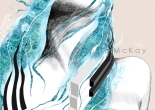
Calliope – New Painting with a Musical Theme
Calliope – hand-drawn digital pencil and ink. Available as a giclee print on paper. I am setting up my print shop and would like to gauge your interest in acquiring … Continue reading

New Drawing / Painting – A detail (work in progress)
A detail of a new painting / drawing I am working on. This one will have a musical theme.
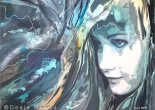
Ebb and Flow – New Acrylic Abstract Portrait
“Ebb and Flow” – new acrylic painting on stretched canvas, 24 x 18 x 0.75 in (61 x 45 x 2 cm). http://www.dosiamckay.com/art/artwork/104.shtml
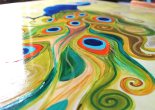
Glossing the New Acrylic Painting
Glossing the Peacock. This is the second layer of gloss. Two more and the colors will reach their optimal vibrance. http://www.dosiamckay.com/art/artwork/103.shtml
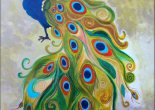
Newly Hatched – The Peacock – Acrylic Painting on Canvas
The Peacock – Acrylics on stretched canvas. The sides are painted, no need to frame. Medium gloss finish. 36 x 48 x 0.75 in (91 x 121 x 2 cm), … Continue reading

Are You a True Artist?
I see these inspirational articles floating all around me, forcing me to examine my artistic direction and stripping my soul to bare bone. Are you a true artist? – they … Continue reading

Deserts – Acrylics and Mixed Media on Paper
Deserts Acrylics and mixed media on canvas paper. 9 x 12 in (23 x 30 cm) $80 http://www.dosiamckay.com/art/artwork/094.shtml Color scheme: beige, gray, sienna, pink.

Lollipop Crush – Abstract Acrylic Painting on Canvas
Lollipop Crush Acrylics on stretched canvas. 18 x 24 x 0.75 in (45 x 61 x 2 cm) $300 http://www.dosiamckay.com/art/artwork/097.shtml Color scheme: red, blue, purple, gray, white, black, silver.

Annunciation – Paper Collage on a Canvas Panel
Annunciation I have finished another collage, although I still need to add a layer of gloss to it. The subject, somewhat provocative, was not my original intent, but it presented … Continue reading

A Space to Dream – Paper Collage on a Canvas Panel
A Space to Dream Paper collage on a canvas panel. High gloss acrylic finish. Unframed. 16 x 20 x 0.5 in (41 x 51 x 1 cm). Sold the other … Continue reading
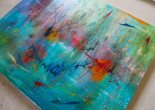
Making Peace With Uncertainty – New Painting – Work in Progress
Making Peace With Uncertainty – work in progress, still drying up, waiting for the final varnish. I am very happy with the several color glazes that gave warmth and dimension … Continue reading

Word Crossing – New Painting – Work in Progress
Word Crossing – work in progress, still drying up, waiting for another layer of gloss. Acrylics on stretched canvas, medium gloss finish, 16 X 20, $220. http://www.dosiamckay.com/art/gallery.shtml
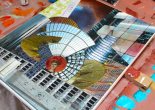
A Space to Dream – Work in Progress
A Space to Dream – Work in progress, paper collage and acrylics on stretched canvas, high gloss finish, 16 x 20, $150 http://www.dosiamckay.com/art/gallery.shtml
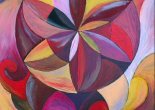
Joyful Surprise – Acrylic Painting on Canvas
Acrylics on stretched canvas. The sides are painted, no need to frame. Medium gloss finish. 18 x 24 x 0.75 in (45 x 61 x 2 cm) $300 http://www.dosiamckay.com/art/artwork/088.shtml I … Continue reading
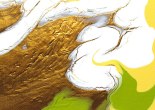
A Painting Experiment Gone Wrong
This batch of paint did not behave the way I expected. It took forever to dry and then cracked. The canvas will be scraped shortly but I wanted to preserve … Continue reading

My Paintings at Jack of Hearts
My paintings were on display at the Jack of Hearts restaurant in Weaverville, NC through the month of May.
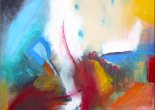
So Much More – Acrylic Painting on Canvas
So Much More Acrylics and ink on stretched canvas. The sides are painted, no need to frame. Medium gloss finish. 24 x 24 x 0.75 in (61 x 61 x … Continue reading
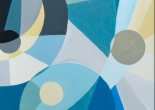
Prismatic 1 – Acrylic Painting on Canvas
Raspberry Float – Acrylics and ink on stretched canvas 24 x 48 x 0.75 in (61 x 121 x 2 cm) $400 – Buy Artwork Color scheme: blue, beige, sand, … Continue reading
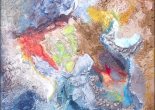
Now Or Never – New Acrylic Painting with 3-Dimensional Texture
http://www.dosiamckay.com/art/artwork/074.shtml I am experimenting a bit more with fluid acrylics and layering. This painting consists of multiple layers of shimmering metallic paint with a rich and varied 3-dimensional texture. Medium … Continue reading
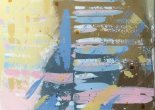
Raspberry Float – Acrylic Painting on Canvas
Raspberry Float – Acrylics and ink on stretched canvas 36 x 48 x 0.75 in (91 x 121 x 2 cm) $600 – Buy Artwork Color scheme: blue, yellow, pink, … Continue reading
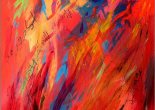
Resonance 3 – Acrylic Painting on Paper
Resonance 3 – Acrylics and ink on heavy paper, unframed 22 x 28 in (56 x 71 cm) $150 – Buy Artwork Color scheme: blue, red, pink, gold, black, purple. … Continue reading
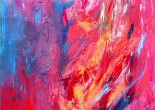
Resonance 2 – Acrylic Painting on Paper
Resonance 2 – Acrylics and ink on heavy paper, unframed 22 x 28 in (56 x 71 cm) $150 – Buy Artwork Color scheme: blue, red, pink, gold, black, purple. … Continue reading
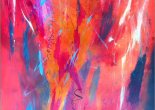
Resonance 1 – Acrylic Painting on Paper
Resonance 1 – Acrylics and ink on heavy paper, unframed 22 x 28 in (56 x 71 cm) $150 – Buy Artwork Color scheme: blue, red, pink, gold, black, purple. … Continue reading

The Burning Bush – Acrylic Painting on Canvas
Acrylics and mixed media on stretched canvas. 36 x 48 x 0.75 in (91 x 121 x 2 cm). A private commission. This painting was inspired by the 3rd chapter … Continue reading

In the Painting Studio
The nude is almost complete. Contouring, then glazing, then varnishing. Varnishing… A friend commented about my white pants. This is Labor Day after all, so I could be taking the … Continue reading

Guardian Angel of Visual Arts
Guardian angel of visual arts at the Lyndhurst Mansion. I think the three realms represent painting, architecture, and sculpture.

The Duty and Allegiance of an Artist – A Message of Paul Hindemith’s Mathis der Maler
This essay was originally a part of a scholarly paper I wrote while in graduate school at New York University. The main body of my work consisted of detailed compositional … Continue reading

Painting Commission – Work in Progress
Here is a snapshot of a work in progress – a private commission of an acrylic painting on stretched canvas. This work was commissioned as a gift in appreciation of … Continue reading

Flush – Acrylic Painting on Stretched Canvas – Modern Figurative Art
I have wanted to paint birch trees for a long time. I miss the birch forests of my native Poland, the smell of the foliage, the touch of the rough … Continue reading
Where Have I Been?
For those of you who wonder what I have been doing, since my visual artistic output has diminished in the last six months, I have been working intensely on my … Continue reading
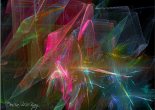
Infatuation – Art Print on Canvas or Acrylic
Infatuation – a quick flicker, a burst of cold fireworks. Lot’s of smoke in the end. The dominant hues in this painting are blue, neon green, and pink. Lots of … Continue reading

Dawning – Digital Print in Blue and Purple
I have always been partial to blue hues, but only to a certain part of the spectrum. I prefer the cool shades of the color, washed out and grayed out … Continue reading

Shedding – Ebb and Flow of Creativity
Shedding – old feathers fall away with old fears. To me art making is often about overcoming my own fears and reaching the inner sanctuary where I can be unconstrained … Continue reading

Medusa Painting – Acrylics, Watercolors, or Digital Medium?
Here is another one of my digital paintings. When describing the technique I used to create it, I like to say that I worked with digital paint. I created the … Continue reading
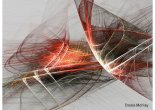
Coincidences – Fractal Digital Art Print
I painted this piece utilizing fractal algorithms. I love it when science and art come together to create something premeditated yet unique. This digital artwork is available in acrylic print, … Continue reading

Unfurling – Digital Art Print
Digital art available in acrylic print, canvas print, framed print, art print, or greeting card. Click here to select size and format. Unfurling Be still my soul What is your … Continue reading
Digital Art Prints and Giclees Available Again
I am happy to announce that many of my digital art paintings are once again available as prints on paper, canvas, and as postcards. You can now choose your preferred … Continue reading

Play With Fire – Acrylic Painting on Stretched Canvas – Modern Abstract Art
I think that art should push boundaries. I don’t like elevator music and I don’t like polite landscape paintings. I hope this one excites and energizes you as much as … Continue reading

Deeper Still – Acrylic Painting on Stretched Canvas – Modern Abstract Art
I love the combination of different hues of blues and greens. To me they are soothing, cooling, and calming. Original abstract acrylic painting on stretched canvas. 24 x 36 x … Continue reading
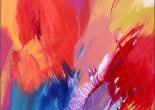
Unquenchable – Acrylic Painting on Stretched Canvas – Colorful Modern Abstract Art
I am experimenting more with fully saturated colors and blending. I truly enjoyed exploring a more energetic, extroverted composition. Original abstract acrylic painting on stretched canvas. 24 x 36 x … Continue reading
25 Fun Exercises to Trigger the Flow of Creativity
Many people in creative fields struggle from time to time with the inability to tap into the flow of creativity. Call it the writer’s block, lack of inspiration, the departure … Continue reading

Commission a Painting
If after looking through my gallery you don’t find exactly what you are looking for, why don’t you consider commissioning a painting? Commissioning artwork is an exciting and rewarding process … Continue reading
Now Or Never – New Acrylic Painting with 3-Dimensional Texture
I am experimenting a bit more with fluid acrylics and layering. This painting consists of multiple layers of shimmering metallic paint with a rich and varied 3-dimensional texture. Medium gloss … Continue reading

So Close So Far – Monochromatic Abstract Art
Original abstract acrylic painting on stretched canvas. 20 x 24 x 0.75 in (50 x 61 x 2 cm). Buy artwork The dominant hues in this painting are white, cream, … Continue reading
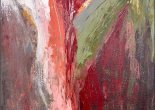
Oleander – New Modern Abstract Painting
Original abstract acrylic painting on stretched canvas. 16 x 20 x 0.75 in (40 x 50 x 2 cm) . Buy artwork The dominant hues in this painting are burgundy, … Continue reading
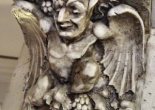
Hidden Art
A few months ago I went for a walk around the Lower Manhattan’s financial district. I was looking forward to arriving at my final destination – the trendy waterfront boardwalk, … Continue reading
 Dosia McKay - Original Paintings